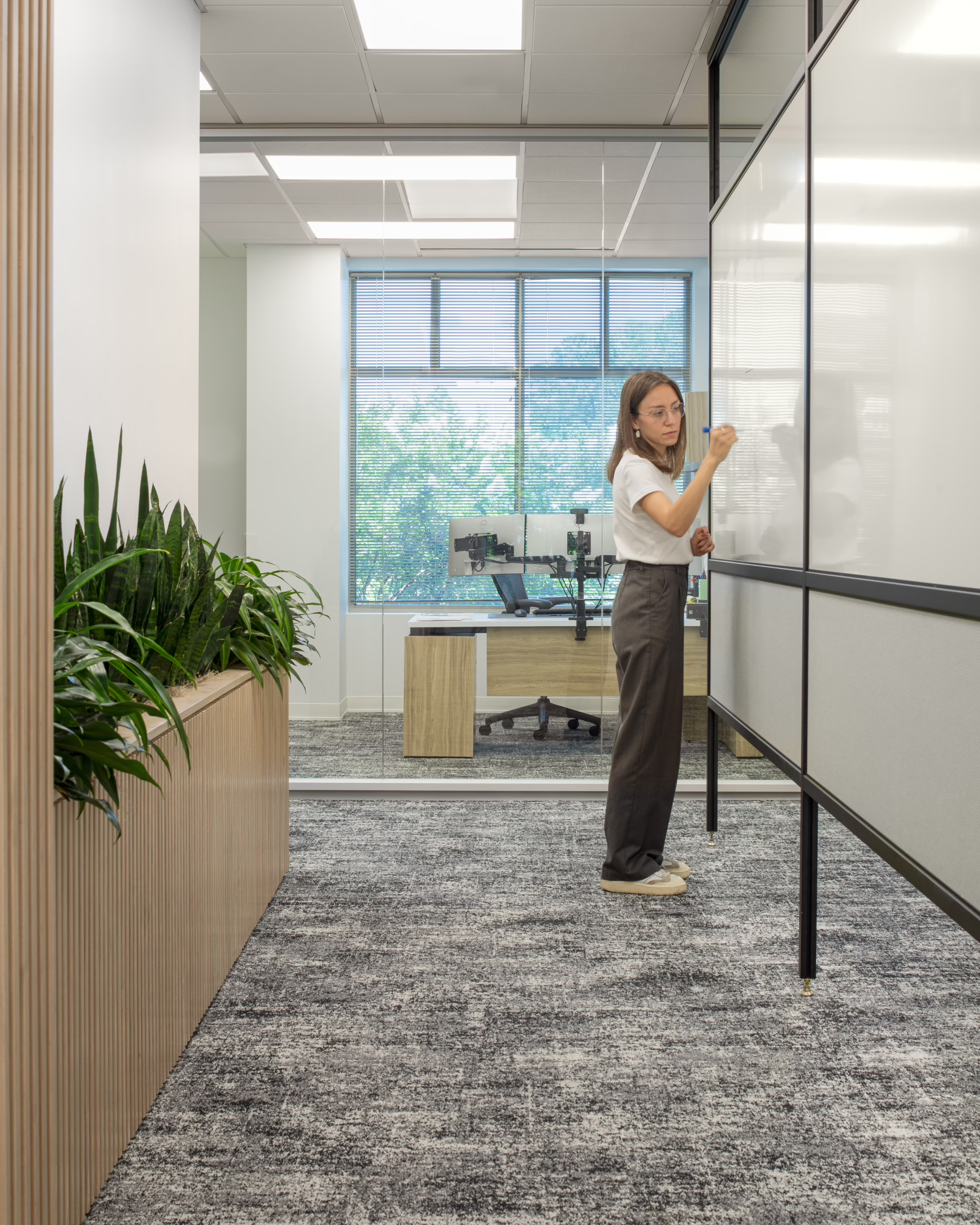
View of entry lobby with soft seating on left against exterior windows. Custom curved reception desk in white on right side of image with coordinating ceiling detail. Large floral artwork piece in back center.

Neuroaesthetics and the Built Environment

by Adriane Field RID, NCIDQ
Senior Interior Designer

THE SCIENCE OF FEELING

Design is not just what can be seen — it’s the feeling one has within a space. Each curve, texture, and plane speaks directly to the mind, influencing how we move, focus, and form connections. Neuroaesthetics — the study of how aesthetic experiences affect the brain — is changing how designers think about the built environment. What someone finds visually pleasing not only has evolved as a personal preference, but it has a measurable effect on cognition, emotion, and wellbeing, revealing that the perception of beauty is a biological necessity. Now more than ever before, with insights from neuroscience, behavioral psychology and intuition, designers can intentionally shape environments that facilitate focus, healing and learning. In the context of corporate, healthcare, and educational interiors, neuroaesthetics offers a paradigm shift: one that reconciles the science with the experience of being human and offers insight into design decisions that are functional and humanly supportive. By integrating these findings into architectural and interior design strategy, designers have an evidence-based opportunity to create environments that can be shown to be beneficial to wellbeing, rather than merely described.

THE SCIENCE OF FEELING

Design is not just what can be seen — it’s the feeling one has within a space. Each curve, texture, and plane speaks directly to the mind, influencing how we move, focus, and form connections. Neuroaesthetics — the study of how aesthetic experiences affect the brain — is changing how designers think about the built environment. What someone finds visually pleasing not only has evolved as a personal preference, but it has a measurable effect on cognition, emotion, and wellbeing, revealing that the perception of beauty is a biological necessity. Now more than ever before, with insights from neuroscience, behavioral psychology and intuition, designers can intentionally shape environments that facilitate focus, healing and learning. In the context of corporate, healthcare, and educational interiors, neuroaesthetics offers a paradigm shift: one that reconciles the science with the experience of being human and offers insight into design decisions that are functional and humanly supportive. By integrating these findings into architectural and interior design strategy, designers have an evidence-based opportunity to create environments that can be shown to be beneficial to wellbeing, rather than merely described.
NEUROAESTHETICS: WHEN SCIENCE MEETS DESIGN
Neuroaesthetics merges neuroscience with art and architecture, studying how aesthetic experiences influence our neurochemistry. Interactions with beauty and harmony boost neurotransmitters like oxytocin, leading to trust, tranquility and connection — responses that underpin wellbeing. (Furniture Lighting & Decor: “Brain Waves — The Neuroscience Behind Interior Design”). Findings supported by research at the Penn Center for Neuroaesthetics help to confirm that the built environment can facilitate or impede human flourishing. Three psychological components are common to the most supportive places: fascination, coherence and hominess. Fascination is created with enough visual interest, natural elements or soft change in texture to maintain people’s interest without overstimulation. Coherence emerges from intuitive circulation, clear spatial hierarchy, and consistent material palettes, helping people navigate spaces with confidence. Hominess is facilitated by warm lighting, tactile finishes, and familiar forms to create emotional comfort and psychological safety.
Designing with these dimensions in mind is especially important as we embrace an increasingly neurodiverse population, as environments are made meaningful and engaging to encourage both stimulating yet predictable engagement. This approach is effective across corporate, healthcare, and educational market sectors to foster focus, learning, healing, and productivity.

HOW SCIENCE MEASURES THE EXPERIENCE OF DESIGN

Designers have intuitively known for decades how one mode of design, one particular form, a type of material, an element of light, feels better than another. Neuroaesthetics offers the scientific validation

— the ability to translate one’s aesthetic experience into quantifiable biological and psychological reactions. Today, designers can intentionally craft environments that support focus, healing, and learning by applying insights from neuroscience, behavioral psychology, and intuition. Neuroaesthetics goes from theory to tangible practice through the following five modern methods: neural imaging, physiological data, behavioral observation, simulation and computational modeling. These methods go beyond subjective preference and shows physiological pathways by which design affects the mind and body:
01 | NEURAL IMAGING AND BRAIN ACTIVATION

Shows that beauty and comfort are neurologically encoded experiences. fMRI and EEG techniques allow scientists to observe how our brains encode spatial and visual information. fMRI — or brain imaging — visualizes which areas of the brain “light up” when people experience a space. Positive responses often map to areas associated with pleasure and emotional balance, so well-designed environments can make us feel good. EEG tracks brainwaves in real time, allowing us to see how design can affect attention and stress. Design implications: Smooth curves and natural materials generally elicit soothing brain activity, whereas cluttered or angular spaces may provoke alertness or tension.

02 | PSYCHOLOGY AND BIOMETRICS

Apart from the brain, the body provides continuous feedback about how it experiences space. The brain feels what the body feels. Sensors measure heart-rate variability, skin-conductance response and eye-tracking to measure comfort, stress and visual clarity. Studies consistently find that daylight, organic materials and coherent layout lower physiological markers of stress. That data confirms intuitive design decisions. Design implications: Natural light, curvilinear circulation paths, and balanced color contrast are consistently associated with fewer stress markers.

03 | BEHAVIORAL OBSERVATION AND PSYCHOLOGICAL EVALUATION

Whereas biometrics show a snapshot of the body’s responses to stimuli not in our conscious awareness, behavioral research quantifies how people behave in a space. Wayfinding efficiency measures how fast they orient and navigate in an environment. Dwell time reflects how long they stay, where they are and how much attention they pay to certain parts of the space. The mood and cognitive testing measure stress, focus or creativity before and after having been exposed to a space and displays how their mood or thoughts change after encountering a space. Design implications: Designs should have clear sightlines, consistent signage, color schemes and flow to make flows naturally occur. Evaluation of where people naturally stop or stay informs where the functional and social zones should be placed. Tracking stress, focus, and creativity allows researchers to measure how certain design aspects affect mental states. Designers can choose the feature design that improves focus, reduces stress and supports productivity.

04 | VIRTUAL AND AUGMENTED REALITY SIMULATION

Designers and researchers increasingly employ VR and AR modeling for a project to predict aesthetic impact before construction. Participants are shown navigating immersive digital prototypes while wearing biometric sensors, allowing real-time data capture of gaze, stress, and engagement. Design implications: Designers can then refine proportion, light, and sound before construction— offering a critical advantage for testing neurodiverse responses, as virtual environments by their nature can be adjusted multiple sensory thresholds.

05 | COMPUTATIONAL MODELING AND AI CORRELATION

With ever-increasing data sets, machine-learning methods are being developed to analyze which form, color, and material combination evokes which kind of neural or emotional response. Such algorithms can detect aesthetic trends associated with wellbeing, aiding in early conception and allowing designers to back up intuitive decisions with quantitative data. But as technology measures the response, human insight makes sense of it — a reminder that data amplifies, but does not replace, empathy. Design implications: AI based concept development can tell designers what combinations of color, light, geometry, and texture are most likely to evoke positive emotional or cognitive responses. It permits designers to anchor the early ideas in data to ground them in results – to take the subjective aesthetics of the first few stages of the design process and convert them into quantifiable wellbeing indicators.

Intuition is "the power of knowing immediately and without conscious reasoning."

INTUITION: THE INVISIBLE ARCHITECT

Research summarized by PositivePsychology.com links intuition directly to creativity: both rely on the brain’s ability to integrate disparate information into coherent, meaningful patterns. In practice, intuition guides the early stages of design — from idea generation to evaluation — helping shape environments that are not only functional but emotionally resonant. Training in architecture and design alters perceptual bias to favor greater appreciation of complexity and asymmetry (Vartanian et al., 2019). But both expertise and intuition coexist. If analysis drives precision, intuition grounds the result in the human

— making sure spaces can speak both to the cognitive and to the emotional. Aesthetic experiences are executed with expertise and intuition, but there is an evolution of preference among every occupant. Design is not static but adapts as knowledge and context change.

WHY IT MATTERS

Architectural training refines perception, altering how designers interpret beauty and comfort in ways that may differ from the general population. Designers naturally seek to recalibrate aesthetic thresholds, creating perceptual biases that differ from those of untrained observers. Most designers have an expanded perception, often redefining beauty and balance in forms that might feel unfamiliar or unconventional to most. Today, science supports what designers have always sensed: personal perception of beauty and comfort are fundamental to how humans experience a space. Neuroaesthetics marks a shift from designing for appearance to designing for how spaces make us feel. Beauty and harmony aren’t just subjective — they have measurable effects on emotion, cognition, and wellbeing.

Neuroaesthetics helps designers move beyond historic perception of beauty as purely subjective and turn our attention to how in the light of scientific research, beauty is a biologically significant aspect of life that impacts emotion, cognition, and overall health. Architects and interior designers are moving from designing for appearance to designing for experience, informed by measurable neurobiological response. Neurodiversity is a crucial consideration for everyone, since people perceive spaces in different ways, and this knowledge allows us to broaden our view of inclusion. When the evidence supports intuition, design transcends aesthetics, becoming about creating environments that support thinking, productivity, healing, and well-being. It pushes designers to see their work not only as creating forms, but as making experiences—turning emotion into structure.
© 2026 All Rights Reserved.